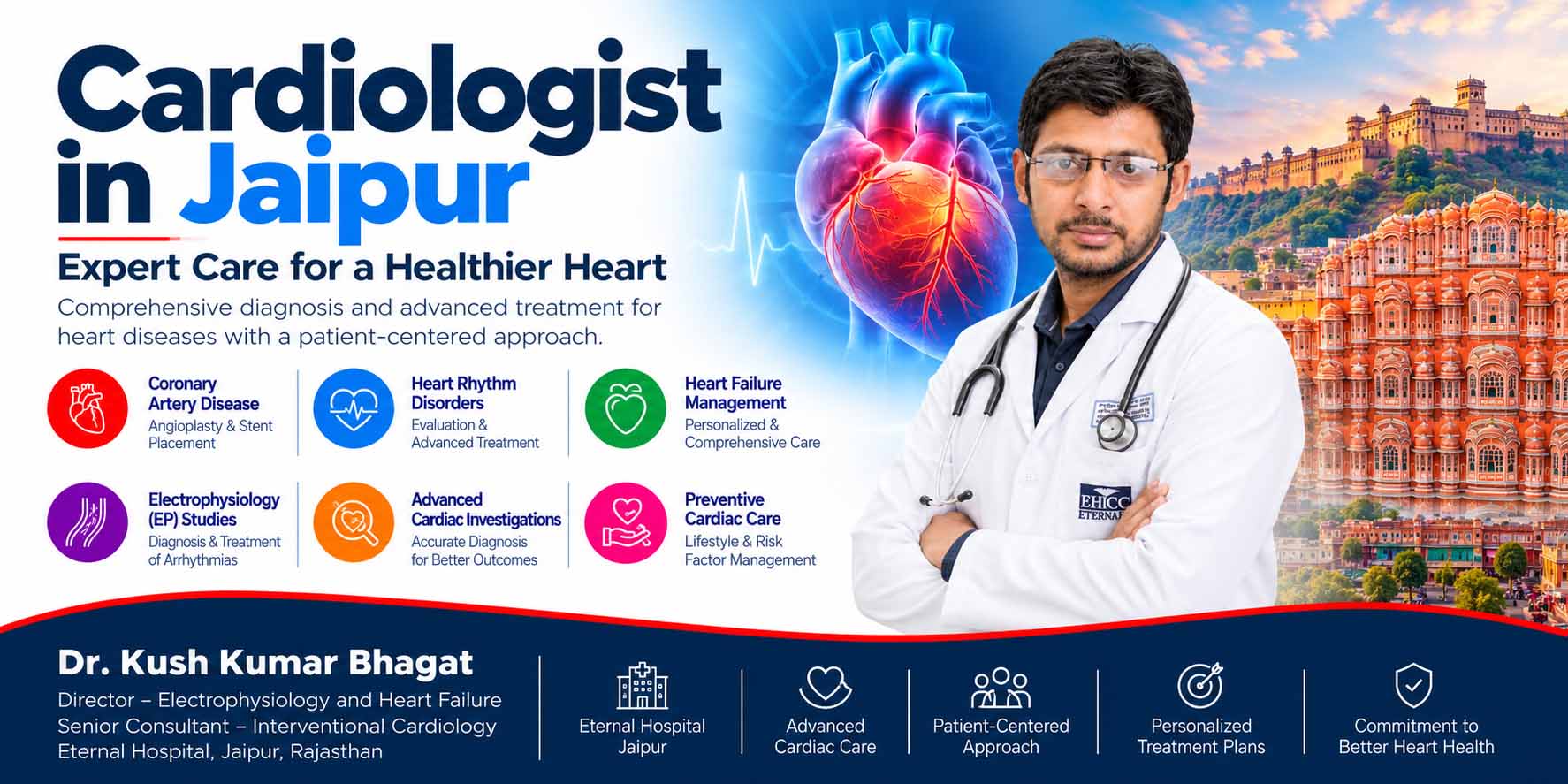
Cardiologist in Jaipur
Understanding Heart Health, Cardiac Conditions and Specialist Care
Heart disease is a significant health concern affecting people across different age groups. Conditions involving the heart and blood vessels may develop gradually or appear with sudden symptoms. Understanding cardiovascular health, recognising warning signs and obtaining appropriate medical evaluation are important aspects of heart disease prevention and management.
A cardiologist in Jaipur evaluates conditions such as coronary artery disease, irregular heartbeats, heart failure, high blood pressure and heart valve disorders.
Dr. Kush Kumar Bhagat is an Interventional Cardiologist and Electrophysiologist associated with Eternal Hospital, Jaipur, Rajasthan. His clinical areas include interventional cardiology, cardiac electrophysiology, heart rhythm disorders and heart failure management.
This educational guide explains common cardiovascular conditions, available diagnostic methods and different areas of specialist cardiac care.
About Dr. Kush Kumar Bhagat – Cardiologist in Jaipur
Dr. Kush Kumar Bhagat is a cardiologist practising in Jaipur, Rajasthan.
His professional designations include:
Director – Electrophysiology and Heart Failure
Senior Consultant – Interventional Cardiology
Eternal Hospital, Jaipur
His clinical work includes the assessment and management of coronary artery disease, cardiac rhythm abnormalities, heart failure and other cardiovascular conditions.
Educational Qualifications
MBBS (Gold Medalist) – Maharashtra University of Health Sciences, Nashik
MD (Internal Medicine) – King George's Medical University, Lucknow
DM (Cardiology, Gold Medalist) – LPS Institute of Cardiology, GSVM Medical College, Kanpur
Fellowship in Cardiac Electrophysiology, Complex Arrhythmias and Pacing – Fuwai Hospital, Beijing, China
His specialist training includes cardiac electrophysiology, which focuses on the electrical system responsible for regulating the heartbeat.
What Does a Cardiologist Do?
A cardiologist is a medical specialist trained to evaluate, diagnose and manage diseases affecting the heart and circulatory system.
Cardiologists assess symptoms, review medical history, evaluate cardiovascular risk factors and recommend investigations when clinically appropriate.
Common conditions evaluated by cardiologists include:
-
 Coronary artery disease
-
Heart rhythm disorders
-
Heart failure
-
High blood pressure
-
Heart valve disease
-
Cardiomyopathy
-
Other cardiovascular disorders
The type of assessment or treatment depends on the patient's symptoms, clinical findings and overall medical condition.
Common Heart Conditions
1. Coronary Artery Disease
Coronary artery disease develops when plaque accumulates within the arteries supplying blood to the heart muscle.
This process can reduce blood flow and may cause symptoms such as chest discomfort, breathlessness or reduced exercise tolerance.
Some individuals may have coronary artery disease without noticeable symptoms.
Depending on clinical findings, evaluation may involve ECG, echocardiography, stress testing, coronary CT angiography or invasive coronary angiography.
2. Irregular Heartbeat and Arrhythmias
The heart normally beats through coordinated electrical signals.
An arrhythmia occurs when these signals produce a heartbeat that is unusually fast, slow or irregular.
Common symptoms may include:
-
Palpitations
-
Racing heartbeat
-
Sensation of skipped beats
-
Dizziness
-
Unexplained fainting
-
Breathlessness
Some arrhythmias cause few or no symptoms and may be identified during medical investigations.
An ECG, Holter monitor or other rhythm-monitoring test may help evaluate suspected arrhythmias.
3. Heart Failure
Heart failure occurs when the heart cannot pump blood effectively enough, or cannot fill normally, to meet the body's needs.
It does not mean that the heart has stopped beating.
Possible symptoms include:
-
Shortness of breath
-
Swelling in the feet or ankles
-
Unusual tiredness
-
Difficulty breathing while lying flat
-
Reduced ability to perform physical activities
Heart failure may develop due to coronary artery disease, longstanding high blood pressure, heart muscle disorders or other cardiovascular conditions.
Management depends on the underlying cause, severity and individual clinical needs.
4. High Blood Pressure
High blood pressure, also known as hypertension, increases the workload on the heart and blood vessels.
Uncontrolled hypertension can contribute to coronary artery disease, stroke, heart failure and kidney disease.
Because high blood pressure often causes no obvious symptoms, regular blood pressure measurement is important.
5. Heart Valve Disorders
The heart contains four valves that help maintain blood flow in the correct direction.
Valve disorders may involve narrowing of a valve or leakage that allows blood to flow backward.
Symptoms can include breathlessness, fatigue, chest discomfort or swelling.
Echocardiography is commonly used to evaluate the structure and function of heart valves.
Interventional Cardiology in Jaipur
Interventional cardiology is a specialised branch of cardiology that uses catheter-based procedures to diagnose and treat selected cardiovascular conditions.
Dr. Kush Kumar Bhagat's listed areas of clinical practice include coronary angiography, coronary angioplasty and other interventional cardiac procedures.
Coronary Angiography
Coronary angiography is an imaging procedure used to examine the coronary arteries.
It helps identify narrowing or blockages that may affect blood supply to the heart muscle.
The decision to perform coronary angiography depends on symptoms, clinical findings and results from other investigations.
Coronary Angioplasty
Coronary angioplasty is a catheter-based procedure used to improve blood flow through selected narrowed or blocked coronary arteries.
A small balloon may be used to widen the affected artery, and a stent may be placed when clinically appropriate.
Not every coronary blockage requires angioplasty. Treatment may involve medication, lifestyle modification, angioplasty or coronary bypass surgery, depending on the individual situation.
Cardiac Electrophysiology and Heart Rhythm Disorders
Cardiac electrophysiology focuses on understanding and managing abnormalities in the electrical activity of the heart.
A cardiologist with specialised training in electrophysiology may evaluate conditions such as:
-
Atrial fibrillation
-
Supraventricular tachycardia
-
Ventricular tachycardia
-
Certain slow-heart-rhythm disorders
-
Other cardiac arrhythmias
Electrophysiological Study (EP Study)
An electrophysiological study is a specialised investigation used to assess electrical signals within the heart.
It may help identify the origin and mechanism of certain arrhythmias.
Radiofrequency Ablation
Radiofrequency ablation is a catheter-based procedure used to treat selected abnormal electrical pathways or areas responsible for certain heart rhythm disorders.
Whether ablation is appropriate depends on the type of arrhythmia and the patient's clinical circumstances.
Pacemaker Implantation
A pacemaker is a small medical device that helps regulate the heartbeat in selected patients with certain slow-heart-rhythm disorders.
Implantable Cardioverter Defibrillator (ICD)
An ICD is a device designed to detect and treat certain potentially life-threatening ventricular arrhythmias.
It is considered for selected patients based on established clinical indications.
Heart Failure Management in Jaipur
Heart failure management involves identifying the underlying cause, assessing the heart's pumping and filling function, and selecting appropriate treatment.
Evaluation may include:
-
Medical history and physical examination
-
Electrocardiogram
-
Echocardiography
-
Relevant blood investigations
-
Additional cardiac investigations when indicated
Management may involve medication, lifestyle measures, treatment of associated medical conditions and, in selected cases, device-based therapies.
Certain patients may be considered for cardiac resynchronisation therapy (CRT), depending on heart function, ECG findings and other clinical criteria.
Warning Signs That May Require Cardiac Evaluation
Heart-related symptoms should be assessed in the context of the person's medical history and overall health.
Chest Pain or Discomfort
Chest pressure, heaviness, tightness or discomfort can have several causes, including coronary artery disease.
Persistent Palpitations
Repeated episodes of rapid, irregular or unusually forceful heartbeats may require rhythm evaluation.
Breathlessness
Unexplained breathlessness during physical activity or at rest may be associated with cardiac or respiratory conditions.
Fainting or Dizziness
Unexplained fainting can sometimes occur due to abnormal heart rhythms or other medical conditions.
Swelling in the Legs
Swelling accompanied by breathlessness or reduced exercise tolerance may be associated with heart failure.
Common Cardiac Diagnostic Tests
A cardiologist may recommend investigations based on symptoms, examination findings and individual risk factors.
Electrocardiogram (ECG)
An ECG records the electrical activity of the heart and may help identify certain rhythm abnormalities.
Echocardiography (2D Echo)
Echocardiography uses ultrasound to evaluate heart structure, pumping function and valve function.
Holter Monitoring
Holter monitoring records the heart's electrical activity over an extended period and may help identify intermittent rhythm disturbances.
Treadmill Test (TMT)
A treadmill test assesses the heart's response to physical exertion and may be appropriate for selected patients.
Coronary Angiography
Coronary angiography provides detailed images of the coronary arteries and may be used when clinically indicated.
Not every patient needs all these tests. Investigations should be selected according to individual clinical requirements.
Understanding Cardiovascular Risk Factors
Several factors can increase the likelihood of developing cardiovascular disease.
These include:
-
High blood pressure
-
Diabetes
-
High LDL cholesterol
-
Smoking and tobacco exposure
-
Obesity
-
Physical inactivity
-
Family history of premature heart disease
-
Increasing age
Some cardiovascular risk factors can be reduced through appropriate lifestyle changes and medical management.
Everyday Habits That Support Heart Health
Maintain a Balanced Diet
Include vegetables, fruits, whole grains, legumes and other nutritious foods. Limit excessive salt, trans fats and highly processed foods.
Stay Physically Active
Regular physical activity supports cardiovascular health. The appropriate type and intensity of exercise depend on age, fitness and existing medical conditions.
Monitor Blood Pressure
Regular blood pressure measurement can help identify hypertension and assess its control.
Avoid Tobacco
Smoking and other forms of tobacco exposure increase cardiovascular risk.
Manage Diabetes and Cholesterol
Appropriate management of blood glucose and cholesterol can help reduce cardiovascular risk.
Follow Prescribed Medication
People receiving treatment for cardiovascular conditions should follow their prescribed medication plan and discuss any concerns with their treating clinician.
Frequently Asked Questions
1. What does a cardiologist in Jaipur treat?
A cardiologist evaluates and manages conditions such as coronary artery disease, heart rhythm disorders, heart failure, high blood pressure and heart valve disease.
2. What is the difference between a cardiologist and an electrophysiologist?
A cardiologist specialises in cardiovascular diseases. An electrophysiologist has additional training focused on the heart's electrical system and rhythm disorders.
3. When should palpitations be evaluated?
Frequent or persistent palpitations, especially when accompanied by dizziness, breathlessness or fainting, may require medical assessment.
4. Can a normal ECG rule out heart disease?
No. A normal ECG does not exclude every cardiac condition. Additional investigations may be appropriate depending on symptoms and clinical findings.
5. Does every patient with coronary artery blockage need angioplasty?
No. Treatment depends on the location and severity of the blockage, symptoms, overall health and other clinical factors.
6. What are the early symptoms of heart failure?
Possible symptoms include breathlessness, unusual fatigue, ankle swelling and difficulty breathing while lying flat.
7. What is a Holter monitor used for?
A Holter monitor records heart rhythm over an extended period and may help detect intermittent arrhythmias that are not captured during a routine ECG.
8. Where does Dr. Kush Kumar Bhagat practise?
According to his professional profile, Dr. Kush Kumar Bhagat is associated with Eternal Hospital, near Jawahar Circle, Jaipur, Rajasthan.
Conclusion
Understanding cardiovascular health is important for recognising symptoms, identifying risk factors and making informed healthcare decisions.
A cardiologist in Jaipur may evaluate a broad range of cardiovascular conditions, including coronary artery disease, irregular heart rhythms, heart failure and high blood pressure.
Dr. Kush Kumar Bhagat's professional background includes training in interventional cardiology and cardiac electrophysiology, with clinical involvement in heart rhythm disorders, heart failure and other cardiovascular conditions.
Appropriate cardiac investigations and management depend on each individual's symptoms, medical history and clinical findings.
Disclaimer: This content is intended solely for public awareness and educational purposes. It does not constitute medical advice or promote any medical services. Diagnosis and treatment decisions require individual assessment by an appropriately qualified healthcare professional.


